
Chimney Cleaning
Brush and vacuum removal of creosote and soot from the flue, smoke chamber and firebox, with the work area sealed and negative-pressure vacuum running the whole time.
How chimney cleaning works →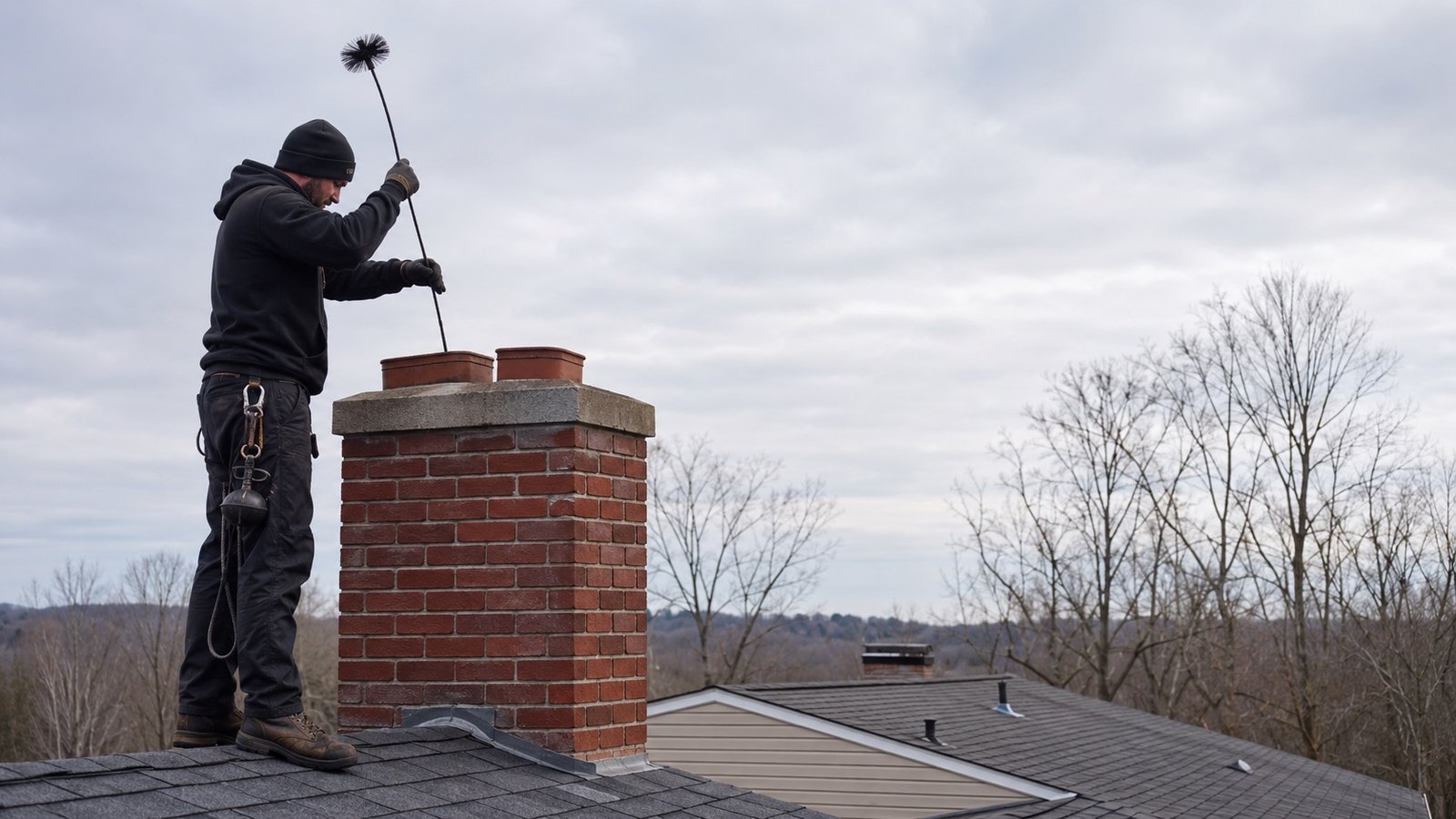
Sweeping, camera inspection, liner installation and masonry repair for fireplaces, wood stoves and furnace flues throughout the Town of Ramapo and Rockland County.
Tell us what the chimney is doing and we’ll get back to you.
Or email info@chimneysweepramapo.com
Most calls start as one thing and turn into another — a sweep uncovers a cracked flue tile, or a leak turns out to be a failed crown. Each service below explains what the work actually involves.
Ask about your chimneyBrush and vacuum removal of creosote and soot from the flue, smoke chamber and firebox, with the work area sealed and negative-pressure vacuum running the whole time.
How chimney cleaning works →A $69 Level 1 visual inspection covers every readily accessible part of the system. Level 2 adds a camera scan of the flue interior and is the right call after a chimney fire, a system change, or a property sale.
What an inspection covers →Cracked flue tile, smoke chamber parging, damper replacement, and structural problems in the chimney itself. Start here if you are not sure which repair you need.
Common chimney repairs →Stainless steel liners sized to the appliance for wood, gas and oil, plus relining of chimneys with cracked or missing clay tile.
Learn about chimney liners →Stainless caps and full-width covers that keep rain, snow, leaves and animals out of the flue and stop downdraft from washing rain into the smoke chamber.
Caps, covers and screens →Repointing open mortar joints, replacing spalled brick, rebuilding chimneys above the roofline, and pouring or resurfacing failed crowns.
Masonry repair options →Tracing water back to its actual entry point — crown, cap, flashing, brick face or a nearby roof detail — instead of sealing the outside and hoping.
Why chimneys leak →Refractory panel and firebrick replacement, firebox mortar joints, hearth extensions, and fireplaces that will not draw properly.
Fireplace repairs →These are the complaints that bring most people to a chimney company. Each one has a short list of likely causes, and none of them are guesses you should have to make yourself.
Usually a draft problem: a closed or rusted damper, a blocked flue, a smoke chamber that was never parged smooth, a flue sized wrong for the firebox opening, or negative pressure pulling air down the chimney from a bath fan or range hood.
Creosote deposits absorb humidity and give off odor when warm, damp air moves down the flue. Cleaning removes the source; a cap and a corrected draft keep the smell from being pushed back into the house.
Water is entering above and running down. The usual suspects are a cracked crown, a missing cap, failed step or counter flashing, or brick and mortar that has absorbed enough water to wick it inside.
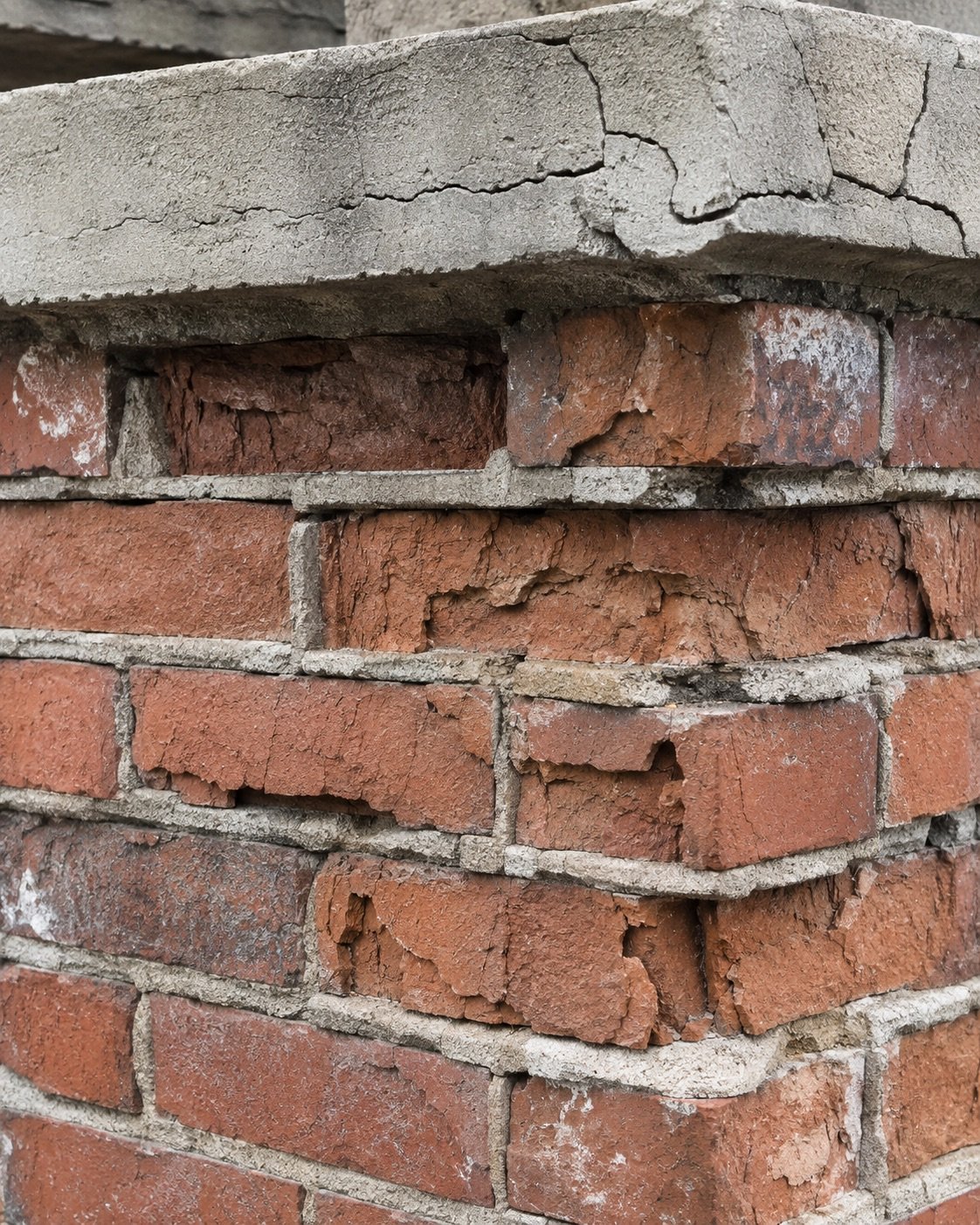
Spalling. Water soaks into the masonry, freezes, expands and pops the face off the brick. It accelerates every winter it goes untreated, and once the crown or cap is the source, patching the brick alone won’t stop it.
An uncapped flue is an open shaft. Birds, squirrels and raccoons nest in it, and the nesting material both blocks the draft and burns. Removal plus a screened cap is the fix.
Sale inspections routinely note cracked flue tiles, an unlined chimney, a deteriorated crown or a missing liner for a converted appliance. These need a chimney-specific inspection to scope properly before anyone prices a repair.
Sweeping and inspection happen on the same visit, because you can’t properly evaluate a flue you haven’t cleaned.
Drop cloths at the hearth, the fireplace opening sealed, and a HEPA vacuum drawing air inward before any brush goes up the flue.
Flue, smoke shelf, smoke chamber and firebox — brushed from top and bottom as access allows, with deposits vacuumed rather than swept into the room.
With deposits gone, the liner, mortar joints, damper, crown, cap and flashing can actually be seen and assessed. Camera scan when the condition calls for one.
What’s serviceable, what needs monitoring, and what needs repair — with photos of anything you can’t see from the floor.
We have been working on chimneys in this county since 1986, and the damage pattern here is driven by water and temperature swings, not by heat. A chimney is the one part of a house exposed on all four sides and open at the top, so it takes in water that the roof sheds.
Through a Lower Hudson Valley winter the masonry goes through repeated freeze-thaw cycles. Water absorbed by brick and mortar during a thaw expands when it refreezes, and each cycle opens the joints slightly more. That’s why the same chimney can look fine one fall and be shedding brick faces the next.
See how we trace a chimney leak or read about repointing and crown repair.
Two things go wrong in a neglected chimney, and they go wrong quietly.
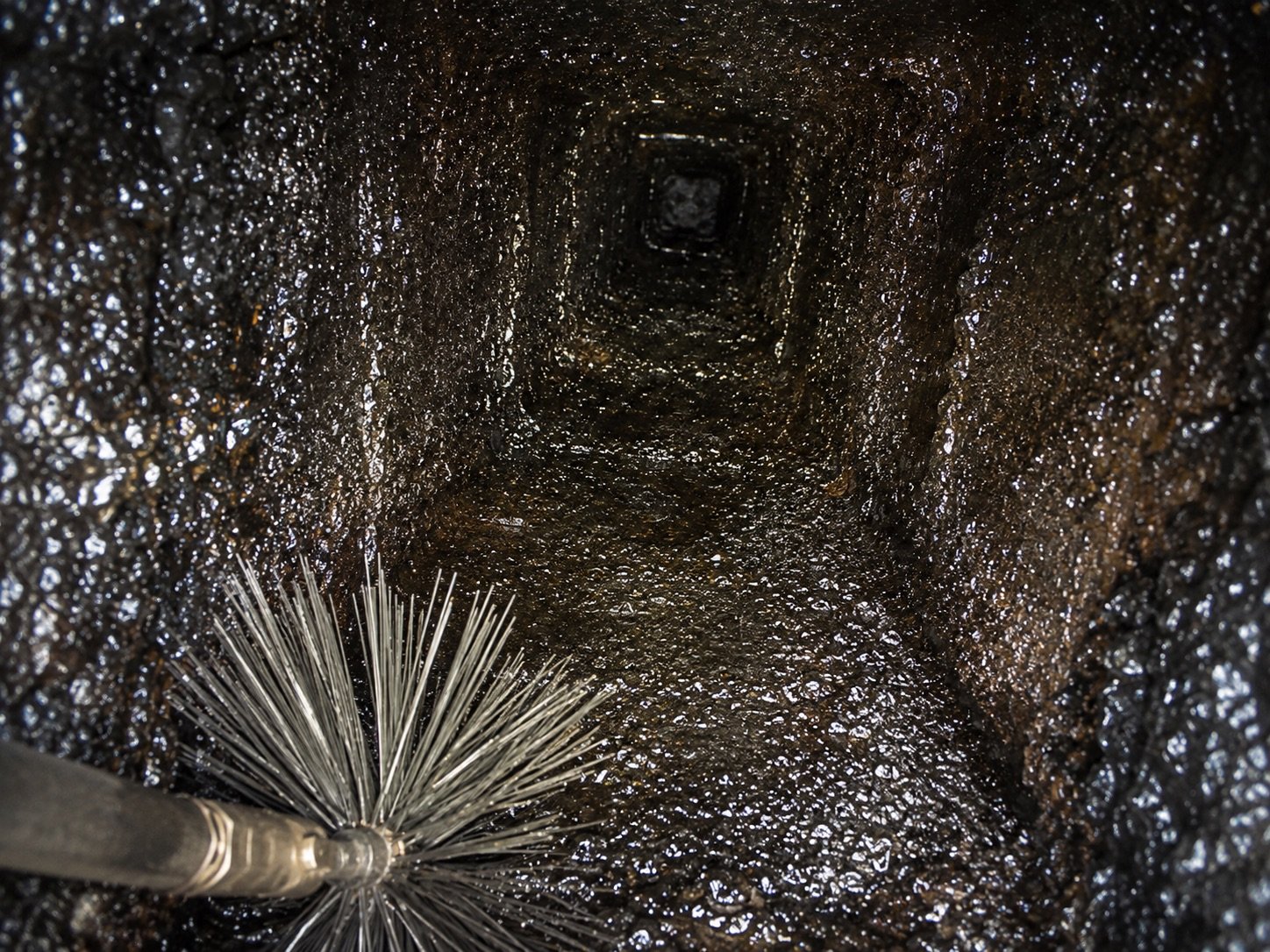
Wood smoke condenses on the flue wall as creosote. In its early stage it’s a flaky soot that brushes off easily. Left in place through more burning cycles it hardens into a tar-like layer and eventually a glazed coating that’s difficult to remove and readily ignitable. A chimney fire in a glazed flue burns hot enough to crack clay tile and expose the framing behind it.
A flue that’s obstructed by a nest, collapsed tile or heavy deposits can’t carry combustion gases out. That applies to gas and oil appliances venting into a masonry chimney as much as to a fireplace — often more so, because nothing about it is visible from inside the house.
The National Fire Protection Association’s standard for chimneys calls for an annual inspection of the venting system. That’s the baseline we work from.
Real jobs with before-and-after photos, findings and the repair performed.
View all projects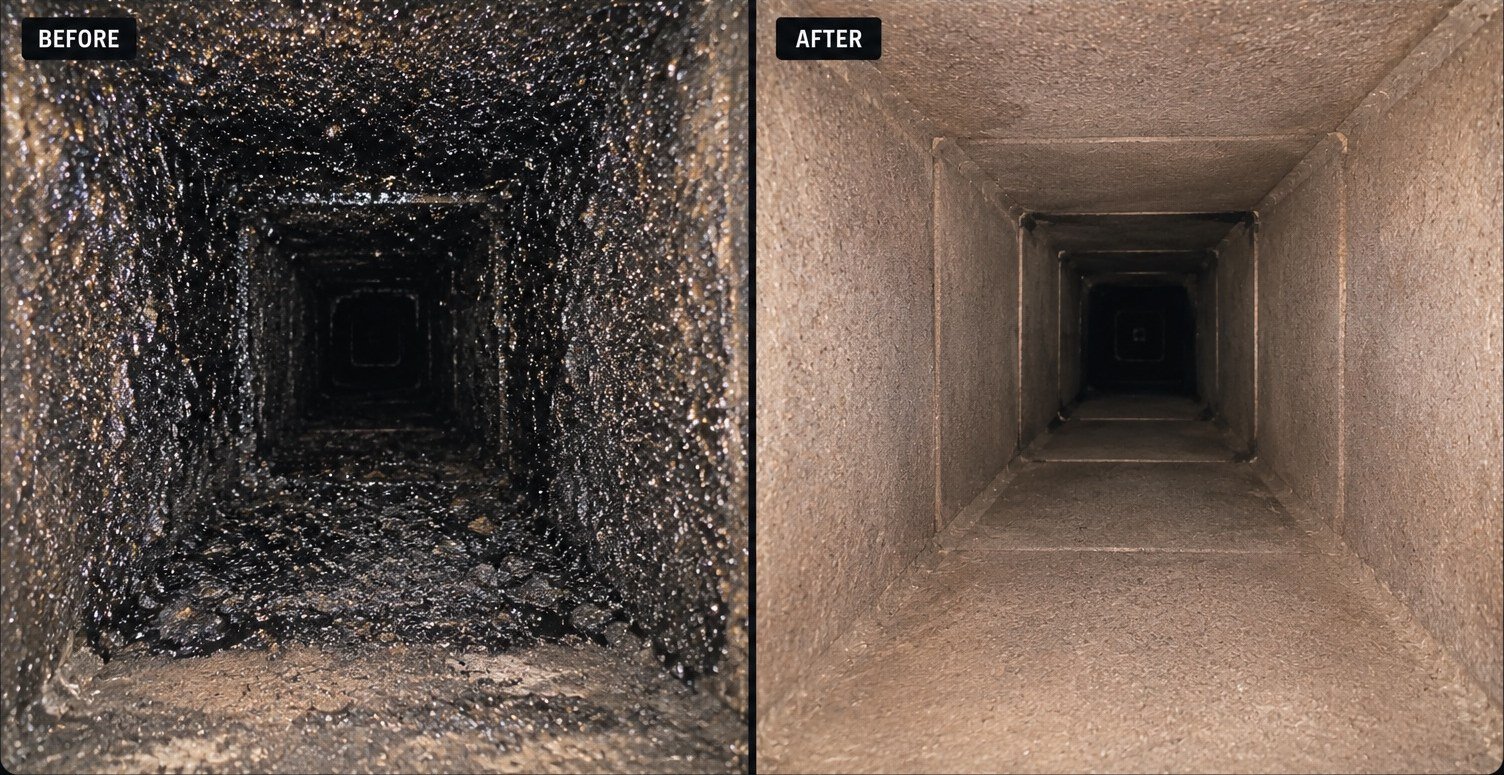
A flue coated in stage-three glazed creosote, cleaned back to bare tile. Deposits at this stage do not brush off and are the condition most likely to sustain a chimney fire.
Chimney cleaning service →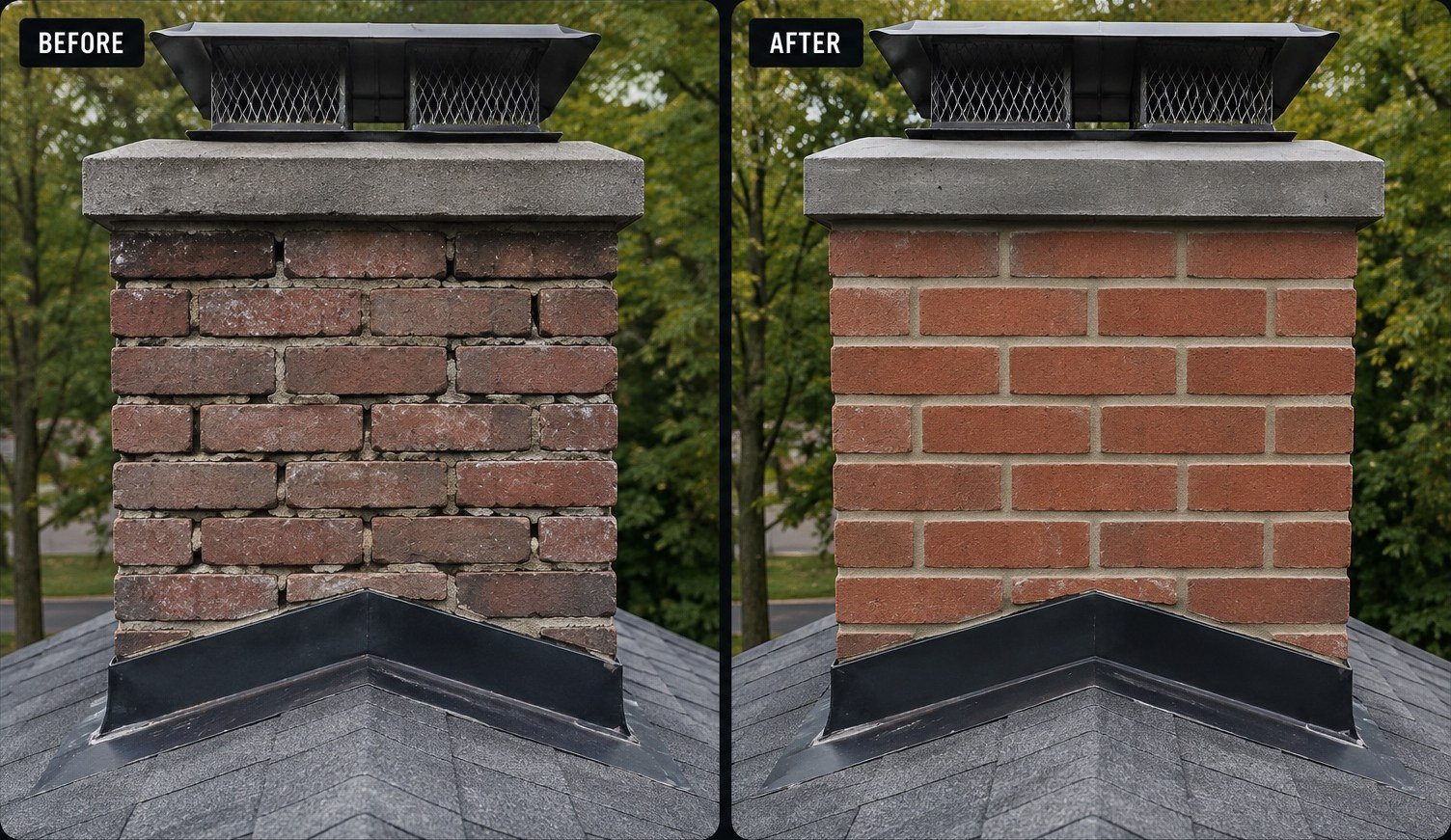
Open and eroded mortar joints ground out and repointed. The old joints had recessed far enough to hold water against the brick, which is how freeze-thaw damage starts.
Masonry and crown repair →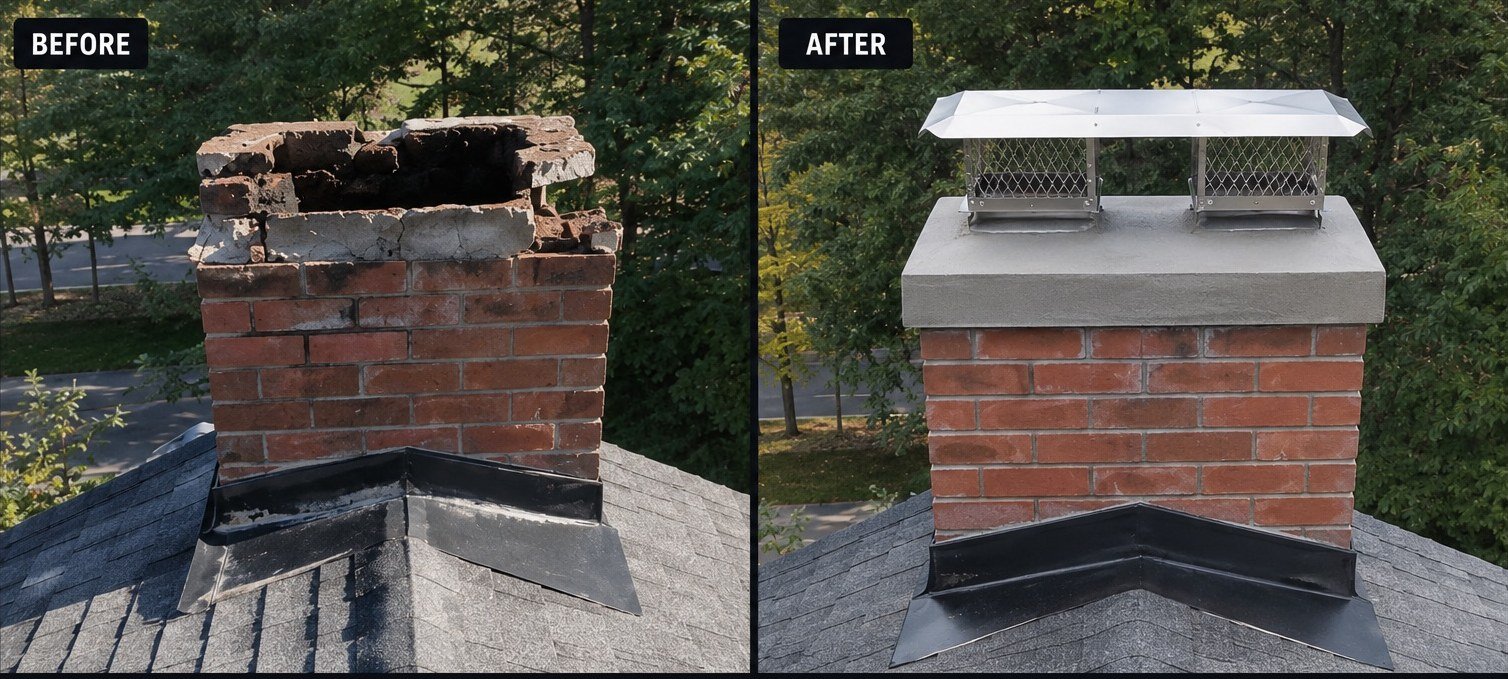
A failed crown with brick and mortar broken away at the top course, rebuilt and poured with a new overhanging crown, then fitted with stainless caps over both flues.
Chimney cap installation →Ramapo covers the western side of Rockland County. We service every community below. This is one honest area list, not a set of thin location pages.
More detail on the full FAQ page.
It depends on use, not the calendar. The venting system should be inspected annually; whether it needs sweeping is decided by how much deposit is present. A common working threshold in the trade is roughly an eighth of an inch of creosote buildup, or any glazing at all. A fireplace burned a few weekends a year may go longer between sweeps; a wood stove run as a primary heat source through a Rockland winter often needs sweeping mid-season.
It shouldn’t. The fireplace opening is sealed and a vacuum runs continuously, holding the firebox under negative pressure so dust moves into the vacuum rather than into the room. Drop cloths cover the hearth and the path in. If soot is landing on your furniture, something about the containment was wrong.
A visual inspection of the readily accessible portions happens as part of the sweep, because the flue can only be evaluated once it’s clean. A camera scan of the full flue interior is a separate, more thorough step — it’s the right call after a chimney fire, before a property sale, when an appliance is being changed, or when the visual raises a question.
The crown is the sloped concrete or mortar slab covering the top of the masonry, sealing the gap between the brick and the flue tile. The cap is the metal cover that sits over the flue opening itself. The crown keeps water out of the chimney structure; the cap keeps rain, snow and animals out of the flue. Both fail in different ways, and a leak diagnosis has to distinguish between them. More on caps.
Yes, and it’s frequently the more urgent case. Gas appliances produce acidic condensate that deteriorates clay tile and mortar over time, and when a high-efficiency appliance is installed the old chimney is often oversized for what’s left venting into it. Deteriorated tile, blockages and improper sizing all interfere with getting combustion gases out of the building.
Not safely, until it’s been evaluated. A crack in a flue tile is a path for heat and combustion gases to reach the surrounding masonry and any framing in contact with it. Depending on the extent, the fix is anything from replacing a section of tile to installing a stainless liner through the existing chimney. How liners work.
Tell us what the chimney is doing — smoke, smell, water, or nothing at all and it’s just been a while. We’ll tell you what it needs.