Family owned in Rockland County since 1986Open 7am–7pm, seven days · (845) 671-3798
Request an Estimate
Chimney flashing repair

Chimney Flashing Repair in Spring Valley, NY

Flashing is the metal that seals the joint between the chimney and the roof. Chimney flashing repair in Spring Valley resets or replaces it when that joint starts letting water in.

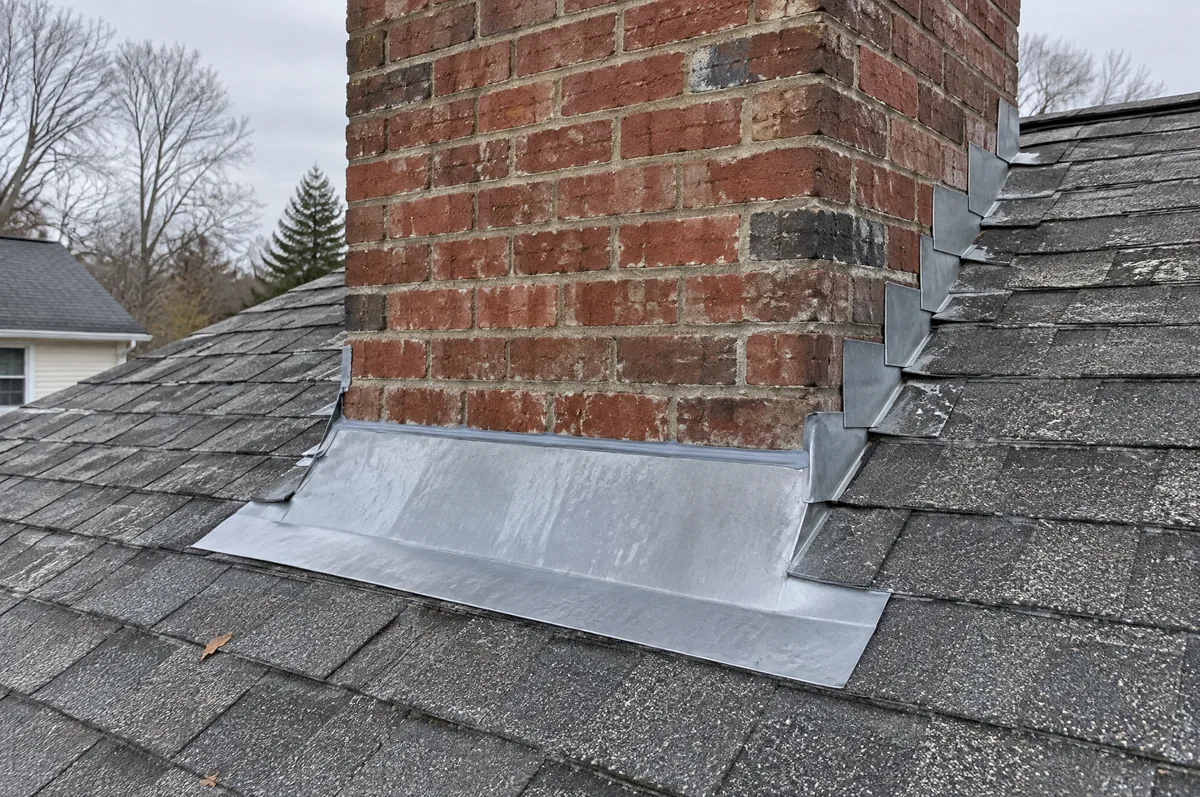
Step flashing and counter flashing where a brick chimney meets a shingle roof

Most common cause

Sealant that has dried out, or flashing that was never set into the mortar joints.

What does not fix it

Roof tar or caulk over the gap. It cracks within a season or two and hides the real problem.

Where to start

A check of the flashing on all four sides of the chimney. A Level 1 inspection is $69.

How chimney flashing works

A chimney and a roof move separately. The house settles and the roof deck expands and contracts, while the chimney stands on its own footing. Flashing has to seal the joint between them and still allow that movement.

It does this in two layers. Step flashing is woven into the shingles and turned up against the chimney. Counter flashing is set into the mortar joints and folds down over the step flashing. Water runs off the top layer onto the lower one and then onto the roof.

Signs the flashing is leaking

  • A stain on the ceiling or wall next to the chimney
  • Rust streaks on the flashing
  • Metal that has lifted away from the brick
  • Thick layers of tar around the base of the chimney
  • Damp or stained roof sheathing in the attic beside the chimney

Chimney flashing repair options

What is done depends on the condition of the metal.

Resealing

Sound flashing with a failed sealant joint is cleaned and resealed where it enters the brick.

Resetting

Counter flashing that has pulled out is reset into freshly cut mortar joints.

Replacement

Rusted, torn or poorly fitted flashing is removed and new step and counter flashing is installed.

Adding a cricket

A small peaked diverter is built behind a wide chimney so water does not pool there.
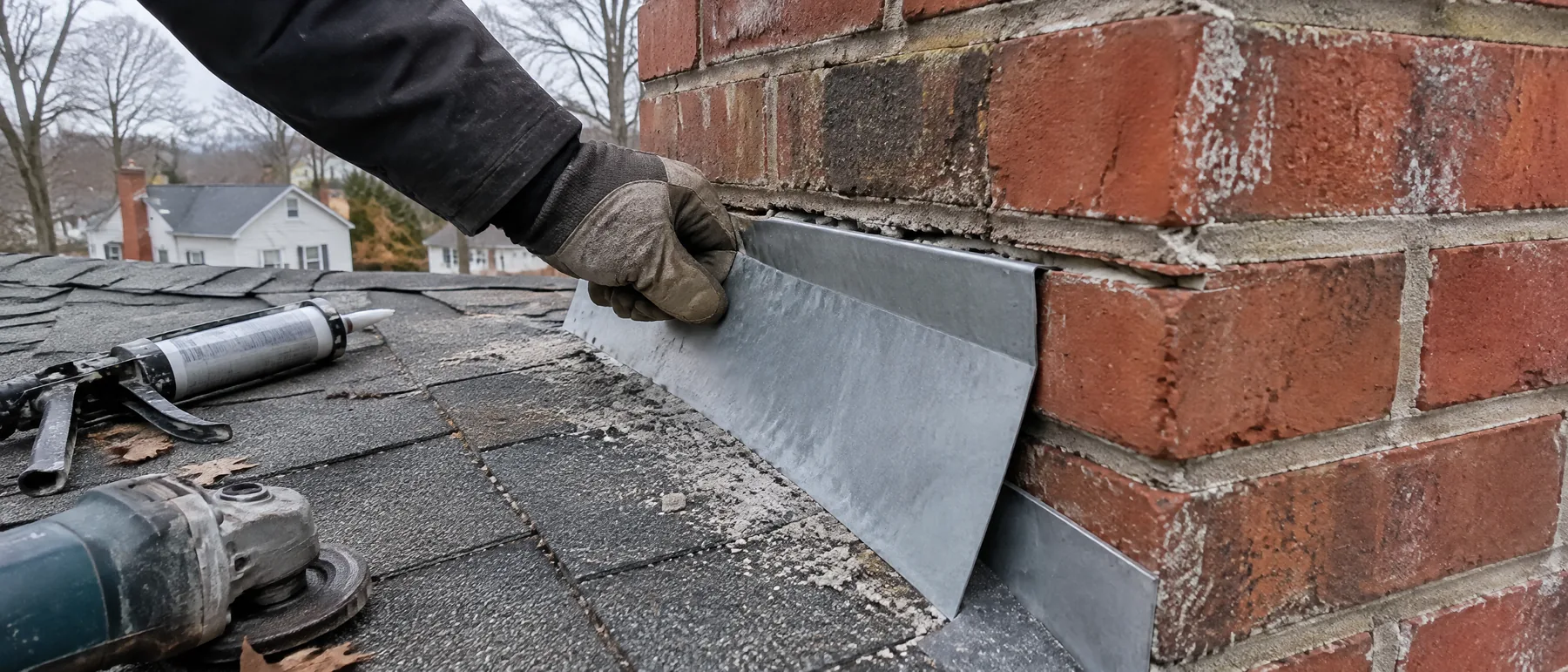
Counter flashing set into the mortar joint of a brick chimney at the roofline

Why the uphill side fails first

Water and snow run down the roof and meet the back of the chimney. On a wide chimney they collect there. Building codes based on the International Residential Code call for a cricket behind any chimney more than 30 inches wide, measured across the slope, to split that flow around the sides.

Flashing leak or something else?

A stain next to the chimney is not proof that the flashing has failed. Water entering through a cracked crown or open mortar joints can run down inside the stack and appear in the same place. Chimney leak repair starts by finding the true source. Crown cracks are covered under chimney crown repair and open joints under chimney masonry repair.

Flashing and other chimney work

New flashing is installed as part of any chimney rebuild from the roofline up. It is also worth checking when a roof is replaced, since old flashing is often left in place under new shingles. Moisture that reaches the flue is a liner concern, covered under chimney liner repair.

Chimney flashing questions

Who repairs chimney flashing, a roofer or a chimney company?

Either can. What matters is that the counter flashing is set into the mortar joints and not surface mounted with caulk.

Can flashing be repaired without replacing the roof?

Yes. Flashing around a chimney can be replaced on its own by lifting and resetting the surrounding shingles.

How long does chimney flashing last?

Properly installed metal flashing can last as long as the roof. The sealant joint needs checking every few years.